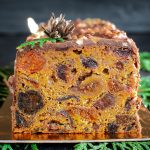
English Christmas Cake
A dark, moist English Christmas cake packed with dried fruit simmered in rum and honey. Bake it 4–6 weeks ahead and brush it with rum once a week; one batch makes four gift-size loaves.
Ingredients
Fruit
- 300 g prunes
- 250 g dried apricots
- 250 g dried figs
- 250 g pitted dates
- 200 g dark raisins
- 200 g dried cranberries
- 200 g dried bananas (or more dates or figs)
- 200 g dried pears
- 200 g dark rum (or brandy, cognac, or bourbon)
- 100 g honey
- 45 g lemon juice
- 30 g vanilla extract
- 1 orange (zest and juice)
- 3 tbsp ground warm spices (cinnamon, ginger, nutmeg, cardamom, cloves, allspice — to taste)
Batter
- 400 g unsalted butter (softened)
- 320 g granulated sugar
- 4 tbsp burnt sugar syrup (or honey or light corn syrup)
- 7 large eggs (room temperature)
- 400 g all-purpose flour (or whole wheat flour)
- 150 g almond flour (or any finely ground nuts except peanuts)
- 80 g fine yellow cornmeal (optional; or 80 g more almond flour)
- 1 1/2 tbsp baking powder
For feeding
- dark rum (as much as the cake will take — one 750 ml bottle usually covers the soak and all six weeks)
Royal icing (optional)
- 3 large egg whites (pasteurized)
- 400-450 g powdered sugar (sifted)
- 1 pinch citric acid
Chocolate-nut glaze (optional)
- 500 g milk chocolate
- 300 g dark chocolate
- 200 g neutral oil
- 160-180 g toasted chopped nuts (walnuts and hazelnuts)
Equipment
- 4 loaf pans 8½ × 4½ in (22 × 11 cm)
- Disposable foil loaf pans optional, handy when baking for gifts
- Adjustable cake frame optional, for baking one large slab
- Pastry brush for feeding the cake
- Heavy-bottomed pot
- Stand mixer or hand mixer
Instructions
Fruit
- Cut all the dried fruit into pieces slightly bigger than a raisin.
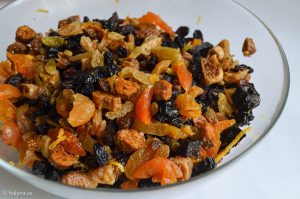
- Put the fruit in a heavy-bottomed pot with the orange zest and juice, spices, rum, honey, lemon juice, and vanilla. Bring slowly to a boil over low heat, cover, turn off the heat, and leave until completely cool.
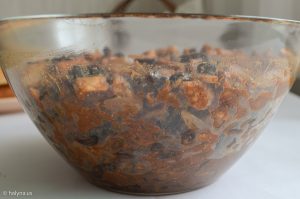
Traditional method: mix the fruit with the orange zest and spices in a bowl. Stir the rum, honey, lemon juice, vanilla, and orange juice together, pour over the fruit, mix well, and cover. Keep somewhere cool (the fridge is fine) for a week, stirring once a day.
Batter and baking
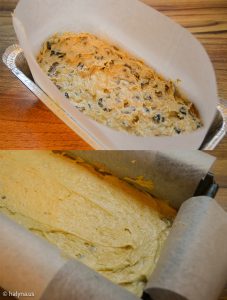
- Heat the oven to 275°F (140°C). Line four 8½ × 4½-inch (22 × 11 cm) loaf pans, or a slab frame set on a deep baking sheet, with parchment.
- Beat the softened butter and sugar until light and fluffy.
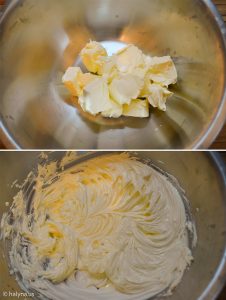
- Beat in the burnt sugar syrup, then the eggs, one at a time.
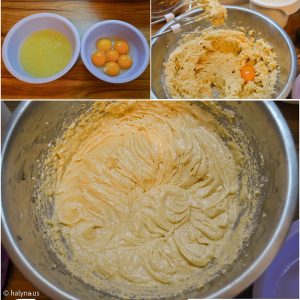
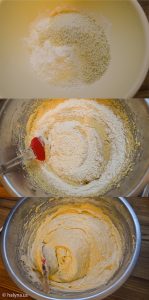
- Whisk the flour, almond flour, cornmeal, and baking powder together and mix into the batter. Set aside 4–6 tablespoons of plain batter.
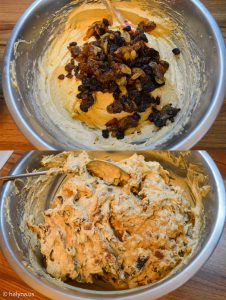
- Fold in the fruit with all of its liquid until evenly mixed.
- Divide among the pans and spread the reserved plain batter thinly over the tops.
- Bake for 1½ hours, then cover with foil and bake 1½ hours more, until a skewer in the center comes out free of wet batter (a little sticky fruit is fine).
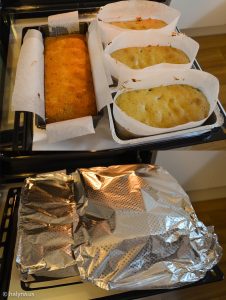
- Take the cakes out of the oven and leave them in their pans.
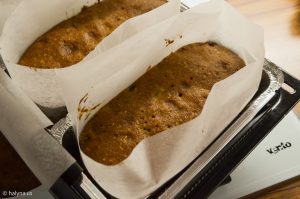
Half batch: use the same pans and the same baking time — you'll get two loaves instead of four.
Feeding and maturing
- Straight out of the oven, while the cakes are still in their pans, brush them generously with rum. Cover with foil and let cool.
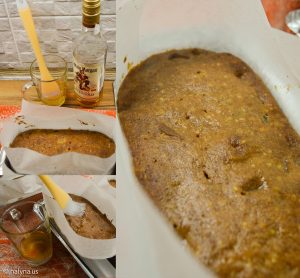
- Unmold the cakes (or cut the slab into four loaves) and peel off the parchment. Brush all sides with rum, then wrap in fresh parchment, foil, and a bag. Store in a cupboard at room temperature.
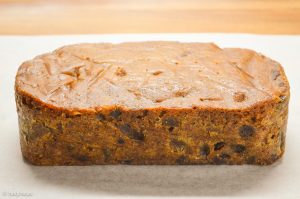
- Once a week, unwrap the cakes, brush all sides with rum, and wrap them again. Keep feeding for 4–6 weeks; after week 4, every week and a half is enough.
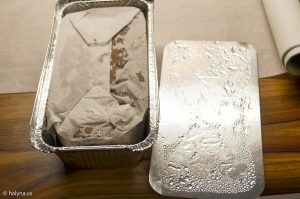
Mature the cakes at room temperature, not in the fridge — the fridge keeps them, but the texture ends up less tender.
Royal icing (optional)
- Whip the egg whites to soft peaks, then beat in the sifted powdered sugar a little at a time with the citric acid until thick, glossy, and spreadable.
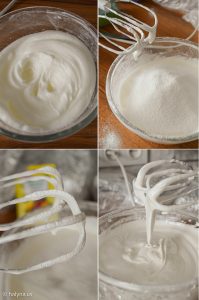
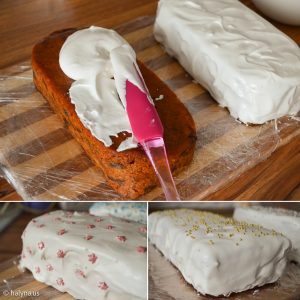
- Spread the icing over the tops and sides of the cakes and leave overnight at room temperature to set.
Chocolate-nut glaze (optional)
- The day before serving, put the unwrapped cakes in the freezer for 4–5 hours.
- Melt both chocolates with the oil in short microwave bursts or over a water bath, stirring. Stir in the toasted nuts.
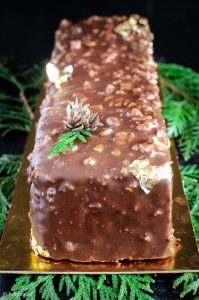
- Set a frozen cake on a rack and pour the glaze over it at 86–90°F (30–32°C). Glaze one cake at a time, collecting the drips and rewarming the glaze before the next.
- Move the glazed cakes straight to the fridge so they thaw slowly. Store them somewhere cool, 50–57°F (10–14°C).
Notes
Keep the total dried fruit at about 1.85 kg (4 lb); the mix is up to you.
The first, hot feeding matters most — that's when the cake drinks the most rum.
Mature at room temperature, not in the fridge. After glazing, store at 50–57°F (10–14°C).
Nutrition
Calories: 277kcalCarbohydrates: 46gProtein: 4gFat: 9gSaturated Fat: 5gPolyunsaturated Fat: 0.5gMonounsaturated Fat: 2gTrans Fat: 0.3gCholesterol: 42mgSodium: 55mgPotassium: 298mgFiber: 4gSugar: 29gVitamin A: 489IUVitamin C: 3mgCalcium: 63mgIron: 1mg